
Working It Out as a Working Mom
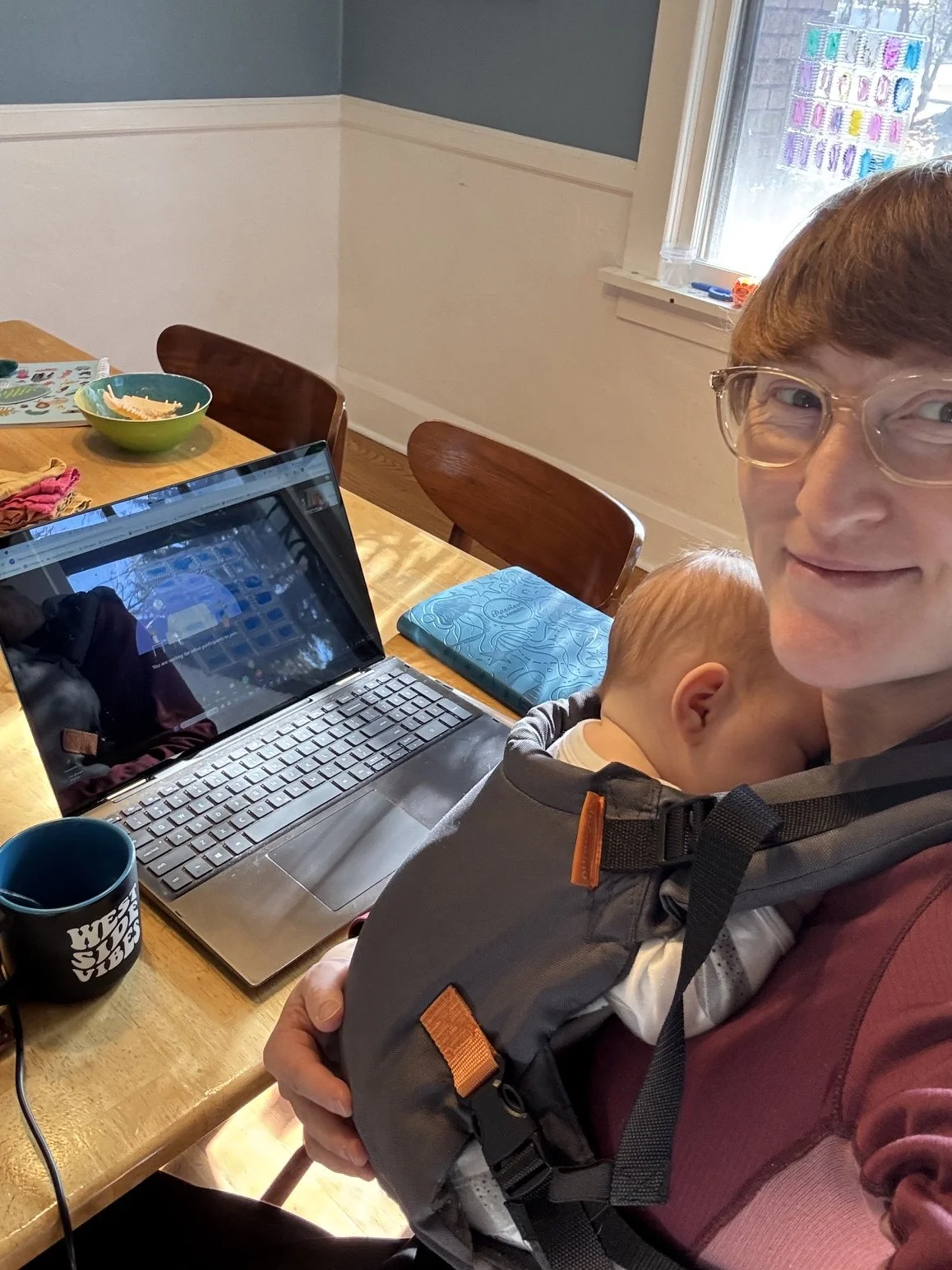
I’ve been a mom-of-three for nine months now.
Funny thing is, I never actually pictured myself here.
I always knew I wanted kids, and I knew I wanted more than one, but I don’t think I ever imagined I would have three. That being said, absolutely no regrets. We thought long and hard about having a third, and we got the coolest third baby imaginable.
As we have added to our family, my experience as a working mom has evolved. With our first, we had full-time childcare (thanks, Dad!), and my husband and I both worked full-time. I took a full 12-week maternity leave…14 maybe…but when it was time, I felt ready to go back to work.
When I found out I was pregnant with our second, I was TWO WEEKS into owning my own business. Through my pregnancy, I still worked essentially full-time but with a lot more flexibility. Postpartum, again, I took a maternity leave but wanted to go back to work relatively “quickly” and didn’t have any doubts about continuing with my job.
With our third, I expected more of the same. My education and my career have always been a huge priority for me, and being a working professional is part of my identity.
Something about #3 changed me.
I had always watched other mothers who had planned to keep working decide to leave the workforce after they had their babies. At times, I wondered why I didn’t feel that pull. I was happy to be a mother, but I was also happy to work.
After our third was born, I found myself getting closer to the date I had set to return to work and feeling more and more resistance to going back.
I wanted to be home! I wanted to be with my baby!!!
Maybe this is what all those other women experienced that I didn’t understand until now.
That was somewhere around 11 weeks postpartum, and I was digging my heels in hard about working again. My resistance softened somewhere between 16–18 weeks, and I learned that I did, in fact, want to go back to work, but I wanted it to look different.
I scaled back. I did more telehealth appointments for a while. I moved to a more affordable office. And I got really firm about my working hours.
Managing Time as a Working Mom
At this point, I see myself as a full-time stay-at-home parent AND a working mom. Even on the days I work, there is so much management that goes into getting my kids and my household ready for me to be gone that it’s not really a day off from mom life.
The administrative and mental load of parenting doesn’t disappear on workdays. Before I leave, someone has to know where everyone is going, what they’re eating, who needs to be picked up, whether the baby has milk, what time someone needs to nap, etc.
I am far from perfect at managing my time, but I have learned a few things.
Boundaries
One of the biggest has been holding firm boundaries about the time I’m at home and the time I’m at work. I used to be willing to flex my time and take extra sessions on random days, at random times, when my kids were at school or daycare. I’d also have a lot of gaps between sessions and somehow switch between home life and work life a couple of times a day.
At this point, that does not work for me at all.
It’s too mentally taxing for me to alternate roles on and off throughout a single day. Having two dedicated workdays where I schedule my sessions and other work tasks in one big chunk means I can get into work mode, stay there all day, and then transition home.
Saying “No”
I’ve also had to get much better at saying no.
In the past, I have been one to say yes to almost every opportunity. This includes both social things and work things. Truth be told, I don’t have that kind of capacity now.
The weird thing about having three kids has been that I’ve had to get so much more intentional about my energy and my time. I can’t white-knuckle it anymore. There’s too much of a cost for me as well as for my kids. We’re all strung out when I schedule too many commitments or we’re trying to get too many things done in a day, especially when those things require a lot of transitions: in and out of the car, home-away-home again.
I used to think the number of things on my calendar was what made a day feel overwhelming. I’ve realized that, for me, it’s often the number of transitions.
So now, I’m careful to evaluate what I actually want to say yes to, what I have the capacity for, and what is simply not going to work out.
Convenience
I have also learned to lean HARD into convenience.
Finding ways to reduce my workload—mentally, physically, and emotionally—has been huge. I’m not sure how I got six years into parenting (including through COVID) without ever ordering grocery pickup or grocery delivery. But here we are. Shout out to my Costco card for giving me two months free of Instacart because I AM HOOKED.
Before this summer, I was spending about three hours a week hauling all my kids to TWO grocery stores to do all of our food shopping. I admit, it can be nice to fill half a day with errands because it keeps everyone occupied. At the same time, I could also spend that half a day drinking coffee on the porch while my kids play at the water table.
Little hacks like ordering groceries while my baby naps or buying the kind of “throw it in the pot” prepared meals for busy nights have been huge for cutting myself a break while still making sure everyone is fed and happy.
Navigating School With Kids
I’m going to be so honest with you here: doing all the school drop-offs and pick-ups for kids who go to different schools with different schedules, all with a baby who is supposed to nap two-to-three times a day, has probably been the hardest part of having three kids.
Poor baby number three has been woken up from many naps to go ride around in the car.
There are easier parts of my kids being in school. I only have one or two kids for the majority of the day instead of all three. But at the same time, summer allows us to move at our own pace, only leave the house if we want to, and all be on the same agenda.
Our biggest challenges with school have been transportation and transitions. There is a lot that goes into managing the big emotions that come from getting out of school, transitioning home, and shifting gears. This is true for me as well as my kids.
I find it incredibly taxing to get in and out of the car, be in and out of the house, and constantly change what I’m doing. I’m not able to have a consistent thread in my day when I’m interrupted every two hours to get in the car.
A few things have made this more manageable.
Divide and Conquer
First, we divide the driving load. After a couple weeks where I felt like I was living in my car, I set an intention to only get in the car twice a day. We have at least three driving needs on a typical school day, so my husband will always do one drop-off or pickup, and we have also utilized babysitters to assist with kid transportation.
Create a Routine
We also try to have a consistent routine for coming home that everyone can rely on. There are already enough transitions happening in everyone’s day. Having some predictability when we get home helps all of us know what comes next. Part of our routine is either a full quiet time (40 minutes) after half-day school or 20 minutes of screen time (tablets) when my oldest gets home at the end of the day. This allows a couple opportunities for decompression time (for them and me) and gives me a chance to get a few tasks done without many other demands on my attention.
Dinner
And then there is dinner.
I prep dinner EARLY.
Once 4 p.m. hits, everyone’s needs skyrocket. All the kids are home from school, everyone is up from naps, and we’re all tired and hungry. I need my brain to cook, and if my brain is in 1,000 other places, either my kids get ignored or dinner isn’t getting made.
Doing dinner prep earlier in the day—even if it’s just chopping veggies, measuring seasonings, or putting together a marinade—means I have the least amount of work possible waiting for me at the end of the day.
Mental Health, Working, and Mothering
Mental health is constantly fluctuating. In my experience, it’s not something you get “under control” and then it just stays that way. There are days when I’m feeling confident and amazing and balanced, and there are days when I am completely losing it.
There are some predictable factors that affect my mood and anxiety, and I’ve gotten much better at recognizing my own warning signs. If I’m suddenly irritated by absolutely everything my family is doing, I can usually work backward and find something that is out of balance.
How much did I sleep? Have I eaten an actual meal? When was the last time I was alone? Have I been outside or moved my body today? Am I hydrated? Have I done one of my hobbies in a while? How connected do I feel to my spouse, my friends, my kids, and myself?
I had postpartum anxiety with my first baby, and I still see some of those symptoms rear their head when I am stretched too thin. Postpartum anxiety isn’t caused by inadequate self-care, but lack of sleep, too much stimulation, not enough food, or too little time to myself absolutely make it harder to cope with what’s already there.
Mental health in parenthood also does not strictly affect mothers. Non-birthing parents can experience perinatal mood disorders as well. Everyone needs to attend to their mental health. If one parent is struggling, it will affect the other.
If I haven’t emphasized this enough, I’m not doing this perfectly at my house. But we have found ways to navigate it.
Personal Time
One is prioritizing person-time for each adult. My partner is such a good example of this because he will literally text my friends and ask them to spend time with me so I can get some time away. This has taught me to also say “yes” when he asks for time to himself.
This summer, that looked like supporting him in doing a weekly trail-running series. I was fearful at first that the commitment would mean a lot more work for me and more nights solo-parenting, but it ended up being so important for his well-being, and we troubleshooted the things that made me nervous.
Sometimes supporting your partner’s well-being creates inconvenience for you, and it’s still worth figuring out.
THERAPY THERAPY THERAPY
There is very little that overrides my weekly therapy appointment. Having a standing appointment each week and planning around it means there is already dedicated time for my mental health. I don’t have to wait until I’m struggling and then figure out where I’m supposed to fit taking care of myself into an already-full schedule.
Enter: The “Brick”
We also bought a BRICK, a little device that physically blocks selected apps on our phones unless we intentionally go tap the phone against it to unlock them.
This has dramatically reduced the time we each spend on our phones, gotten me off social media for the majority of every day (less scrolling, much better mental health, who knew? Hint: everyone knows this), and helped us be more present with one another while setting a better example for our kids about screens.
Another amazing side effect has been significantly better sleep. I am able to go to sleep earlier because I’m not stuck on my phone and I can truly feel the difference in the quality of my sleep, how deep and restful of a sleep I’m getting, and how much I’m dreaming.
Keeping My Cool
I don’t keep my cool.
Let’s be real. There’s no job in the world with the kind of demands as parenting. It’s inhuman…maybe even inhumane…to think of spending 24/7 with anyone else, let alone MULTIPLE people, without a break.
Especially when those people have so many needs!
I lose it sometimes. I’m working on losing it less, but I don’t think the goal is to become a parent who never gets overwhelmed, never raises their voice, and responds therapeutically to every single meltdown. That’s not a standard I’m interested in holding myself—or other parents—to.
When I do lose my cool, I work on seeing it as an opportunity to model what it’s like to have a big feeling and how to make repairs when ruptures happen. I can also take it as data: something is happening here. I’ll ask myself if I have an unmet need, maybe I’ve taken on too much, or maybe my capacity is simply gone for the day. Then I can decide what I want to do about it.
One of the tools I come back to frequently comes from Dr. Julie Colwell and her concept of the unarguable truth. An unarguable truth is something I can say about my own internal experience that another person can’t argue with: what I’m noticing in my body (sensations), what I’m feeling (emotions), and what I really want.
This is very different from telling someone else what they are doing, thinking, or feeling.
“You guys are driving me crazy and nobody is listening to me!” might accurately capture the vibe in my head, but it also puts everyone else immediately on the defensive.
“I notice my chest feels tight. I’m feeling overwhelmed, and I really want five minutes of quiet,” gives me a way to communicate what is actually happening inside of me without making someone else responsible for it.
Sometimes I can do that in the moment. Sometimes I absolutely cannot. Sometimes I recognize what was happening 20 minutes later and come back to repair. That counts too.
I also use what Gay and Katie Hendricks call “shift moves”—small, intentional ways of changing what is happening in my body when I notice myself getting stuck. Instead of trying to THINK my way out of being overwhelmed, I might move my body, change my breathing, shake out some tension, go outside, make a sound, or physically change where I am. Sometimes my brain does not need another parenting strategy. Sometimes my whole system just needs to MOVE.
Also, whether I “keep my cool” relies a lot on preventative measures, long before the moment when I’m about to lose it. It happens when I say no to something I don’t have capacity for. It happens when I order the groceries instead of dragging three kids through Costco. It happens when my husband does a school pickup. It happens when I go to therapy. It happens when I put my phone down, eat lunch, go outside, or recognize that everyone in my house has had enough for the day.
Nine Months In
Nine months into being a mom of three, I still care deeply about my work. I love being a therapist. I love having a career, using my brain in that way, and having an identity that exists outside of motherhood.
I also want to be home more than I ever have before.
I’ve stopped seeing those things as contradictory.
I don’t think managing work and motherhood has been about finally finding the perfect schedule or becoming exceptionally good at time management. If anything, having a third baby has forced me to stop trying to squeeze more into the time I have.
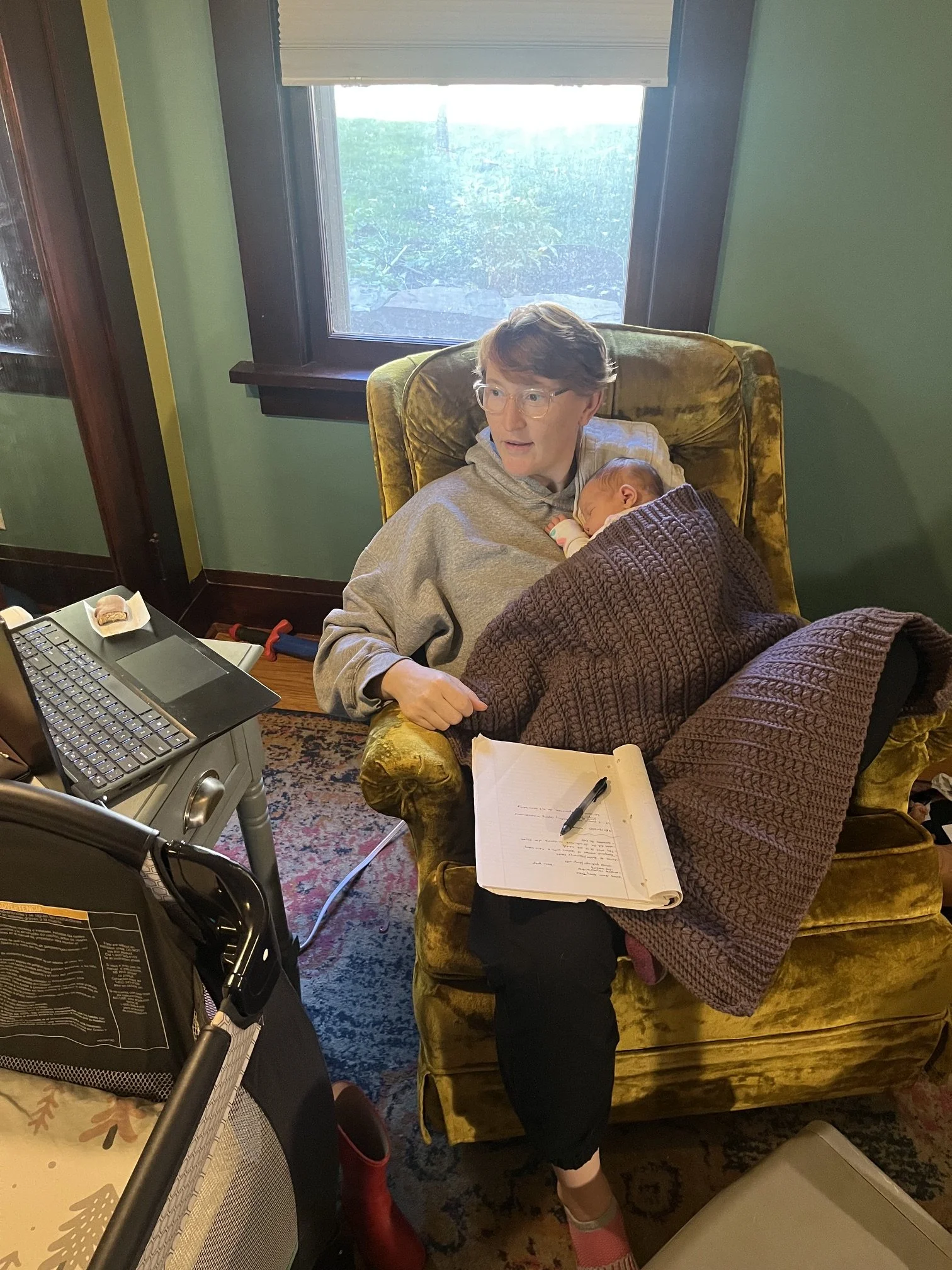
I’m learning to pay attention to my capacity. To reduce transitions. To accept help. To pay for convenience when I can. To protect time for myself and my relationship. To say no. To notice when something isn’t working and let myself change it.
And I’m learning that “keeping my cool” doesn’t mean I never lose it. Sometimes it means noticing sooner. Sometimes it means repairing afterward. Sometimes it means realizing that I’m trying to function without enough sleep, food, space, support, or time to be a person.
I’m only nine months into this version of our family, so I’m sure it will change again. School schedules will change. My kids will need different things. My work will evolve. I will evolve.
Maybe that’s the part I understand differently now: balance isn’t something I’m going to finally figure out and then maintain forever.
The goal is to keep building a life that has enough room to change as we do.
